Commercial Roof Insulation: A Complete Guide for Florida Business Owners
If you own a commercial building in St. Petersburg or anywhere in central Florida, you already know the toll our climate takes on your roof. Between the scorching summer heat, afternoon thunderstorms, and the occasional hurricane, your roof endures a lot, and without proper commercial roof insulation, you're likely paying more in cooling costs than you should.
We've seen too many business owners wait until their HVAC bills spiral out of control before addressing insulation. The good news? Upgrading your commercial roof insulation can slash cooling expenses by 20% to 40%, extend your roof's lifespan, and keep your building comfortable year-round.
In this guide, we're walking you through everything from understanding R-values and choosing the right materials to navigating Florida's building codes and finding a contractor who'll get it done right. Whether you manage a warehouse in Tampa, a retail space in Clearwater, or an office building in Bradenton, this guide will help you make smart, informed decisions that protect your investment.
Let's get started.
Understanding Commercial Roof Insulation
What Is Commercial Roof Insulation?
Commercial roof insulation is the protective layer installed between your building's interior and the roof deck. It acts as a thermal barrier, slowing down heat transfer so your space stays cooler in summer and warmer (when needed) during those rare cold snaps.
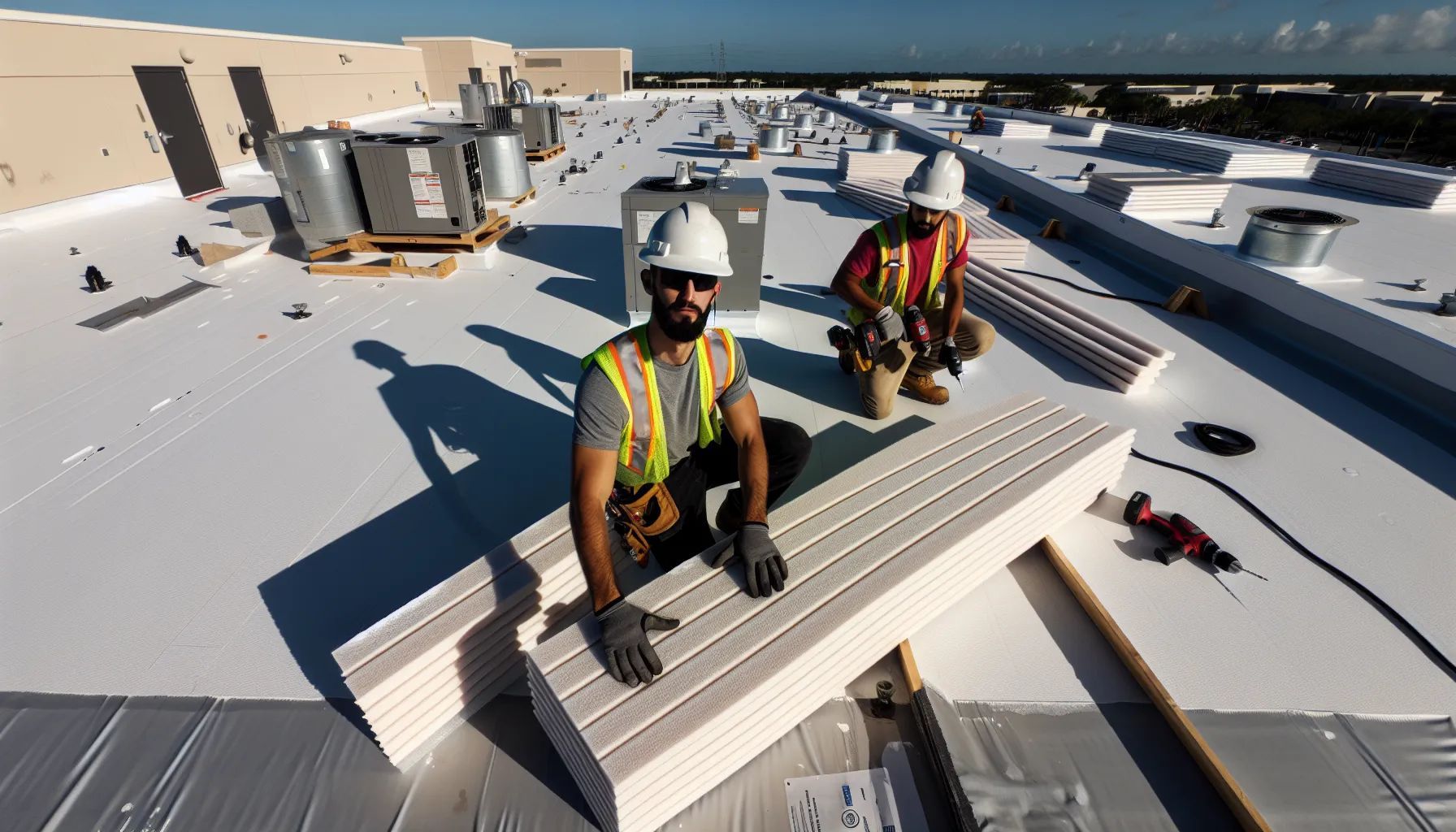
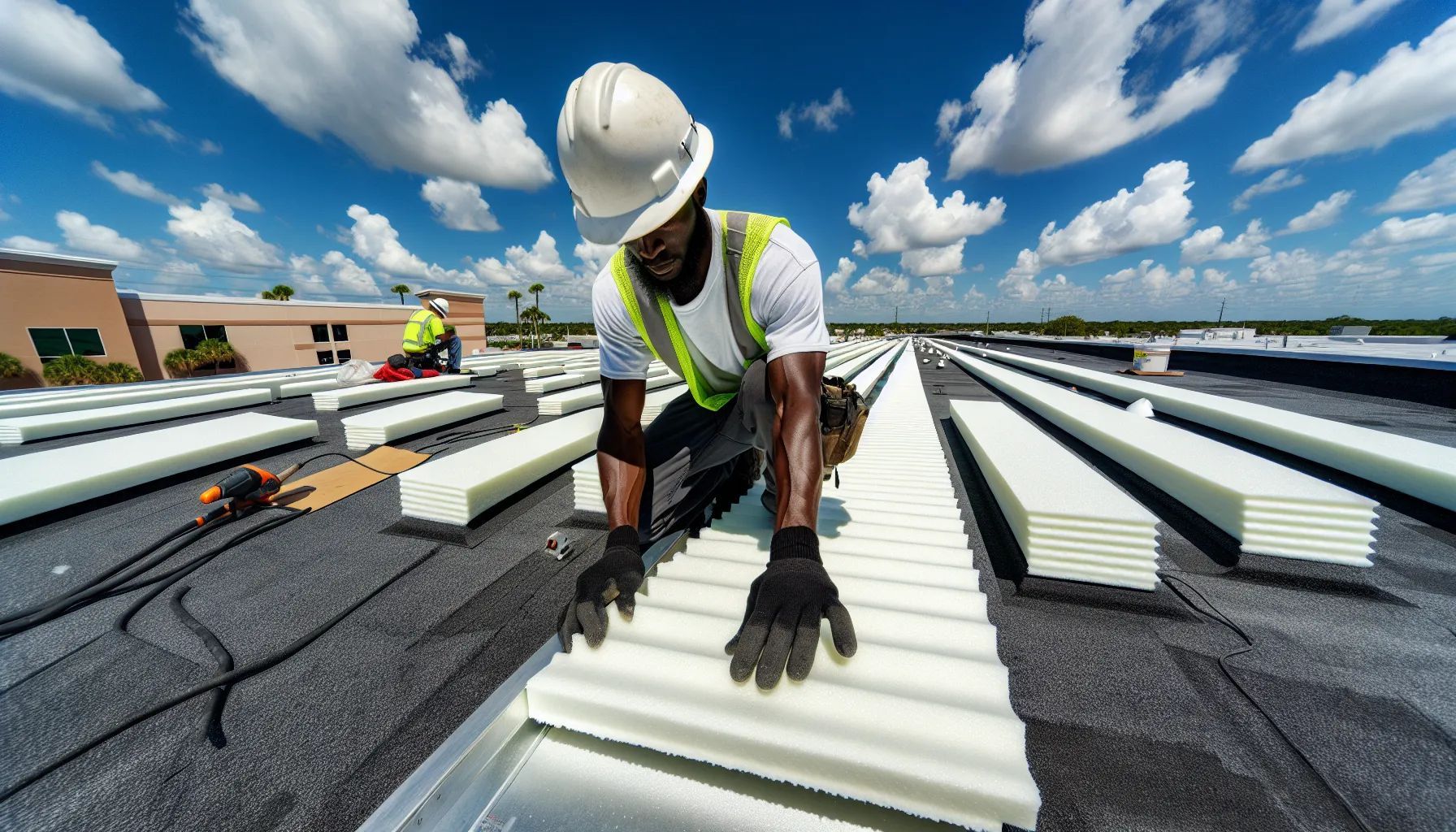
Unlike residential attics with loose-fill insulation, commercial systems typically use rigid foam boards or spray-applied materials. These are designed for flat or low-slope roofs common on warehouses, retail centers, and office buildings. The insulation sits directly under the roofing membrane, TPO, EPDM, or built-up roofing, and plays a critical role in the overall roof assembly's performance.
Without it, your roof deck heats up like a griddle, transferring that energy straight into your building. Your HVAC system has to work overtime, driving up energy bills and wearing out equipment faster than it should.
Why Proper Insulation Matters for Florida Commercial Buildings
Florida isn't just hot. It's relentlessly hot and humid, which creates a perfect storm for energy waste and roof damage.
Proper commercial roof insulation keeps the heat out. When your roof isn't adequately insulated, solar radiation heats the roof deck to 160°F or higher. That heat radiates down into your building, forcing your air conditioning to run constantly just to maintain a comfortable temperature.
Here's what proper insulation does:
- Cuts cooling costs: Studies show well-insulated commercial roofs can reduce cooling expenses by 20% to 40%, depending on the building's size and existing conditions.
- Controls humidity: Insulation helps regulate temperature differentials that cause condensation. Less moisture means less mold and fewer interior air quality issues.
- Extends roof life: By minimizing temperature swings, insulation reduces expansion and contraction cycles that stress roofing membranes. That translates into fewer leaks and longer time between re-roofs.
- Improves occupant comfort: Stable interior temperatures mean happier tenants, more productive employees, and fewer complaints
If you're within 150 miles of St. Petersburg, you also face hurricane season every year. Proper insulation adds structural support and helps your roof system resist uplift during high winds. It's not just about comfort, it's about resilience and long-term savings.
Types of Commercial Roof Insulation Materials
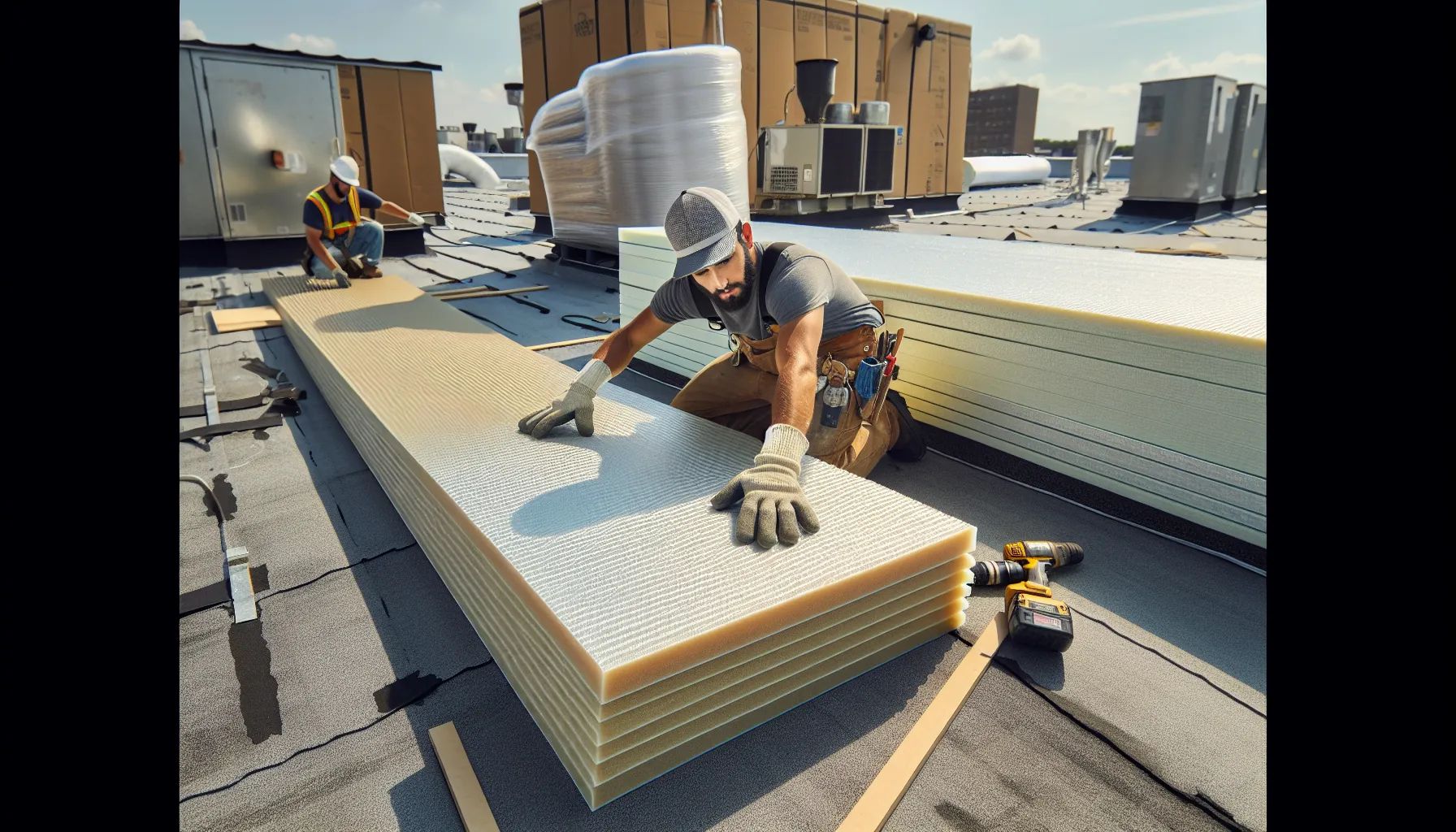
Choosing the right insulation depends on your building type, budget, and performance goals. Let's break down the most common materials used in Florida.
Polyisocyanurate (Polyiso) Insulation
Polyiso is the heavyweight champion of commercial roof insulation. It's a closed-cell foam board with an R-value around 5.6 per inch, the highest of any rigid foam on the market.
Why we recommend it:
- High thermal resistance: You get excellent energy efficiency without adding excessive thickness or weight to your roof.
- Durability: Polyiso resists moisture absorption better than many alternatives, making it ideal for Florida's humidity.
- Code compliance: Most polyiso products meet or exceed Florida's R-value requirements for commercial roofs.
- Lightweight: Even though its performance, polyiso doesn't overload roof structures, which is important for retrofits on older buildings.
Polyiso works exceptionally well on flat and low-slope roofs with TPO or EPDM membranes. It's our go-to recommendation for most commercial projects in the Tampa Bay area.
Expanded Polystyrene (EPS) and Extruded Polystyrene (XPS)
Both EPS and XPS are foam board products, but they're manufactured differently and offer distinct advantages.
EPS (Expanded Polystyrene):
- Budget-friendly: EPS is one of the most economical options, making it attractive for cost-conscious projects.
- Customizable thickness: You can spec EPS at almost any thickness to hit your target R-value.
- Good compressive strength: It can handle foot traffic and equipment loads during installation and maintenance.
- Moderate R-value: Around 3.6 to 4.0 per inch, lower than polyiso but still effective when layered.
EPS is popular for large warehouse roofs where upfront cost is a major consideration. Just be aware it can absorb moisture over time if the roofing membrane fails, so proper installation is critical.
XPS (Extruded Polystyrene):
- Water-resistant: XPS has a denser cell structure that resists moisture infiltration better than EPS.
- Mid-range R-value: Typically around 5.0 per inch.
- Excellent durability: Holds up well in high-humidity environments and areas with heavy rainfall.
- Higher cost:
- More expensive than EPS but cheaper than polyiso in most cases.
XPS is a solid middle-ground choice. We often recommend it for buildings near the coast or in flood-prone areas where moisture resistance is paramount.
Spray Polyurethane Foam (SPF) Insulation
SPF is a game-changer for roofs with irregular shapes, penetrations, or existing insulation problems. It's applied as a liquid, expands on contact, and hardens into a seamless, monolithic layer.
Benefits of SPF:
- Seamless air barrier: No gaps, seams, or thermal bridging. SPF fills every crack and crevice.
- High R-value: Around 6.0 to 7.0 per inch, among the best available.
- Self-adhering: Bonds directly to the existing roof deck, adding structural strength.
- Lightweight: Adds minimal load to the roof structure.
- Renewable surface: With periodic recoating, an SPF roof can last decades.
SPF shines on roofs with lots of HVAC units, vents, and other equipment. It conforms to any shape and eliminates the fastener patterns that can create weak points in rigid board systems.
The downside? SPF requires skilled applicators and favorable weather conditions during installation. It also needs a protective coating to shield it from UV degradation. But when installed correctly, it delivers unmatched energy savings and longevity.
Mineral Wool and Fiberglass Insulation
Mineral wool and fiberglass are the old-school options. They're less common on commercial roofs today but still have their place.
Mineral Wool:
- Fire-resistant: Non-combustible, making it a good choice for buildings with strict fire codes.
- Soundproofing: Excellent acoustic performance if noise control is a priority.
- Lower R-value: Around 3.0 to 3.3 per inch, so you'll need thicker layers to match foam products.
- Affordable: Budget-friendly for basic upgrades.
Fiberglass:
- Economical: One of the cheapest options per square foot.
- Good thermal performance: R-value around 2.9 to 3.8 per inch.
- Moisture-sensitive:
- Can lose insulating value if it gets wet, making it risky in Florida without excellent moisture barriers.
We rarely recommend fiberglass or mineral wool for new commercial roof projects in Florida. They just don't perform as well in our climate as modern foam products. But if you're on a tight budget and willing to accept lower efficiency, they can work for short-term upgrades.
Energy Efficiency and Cost Savings Benefits
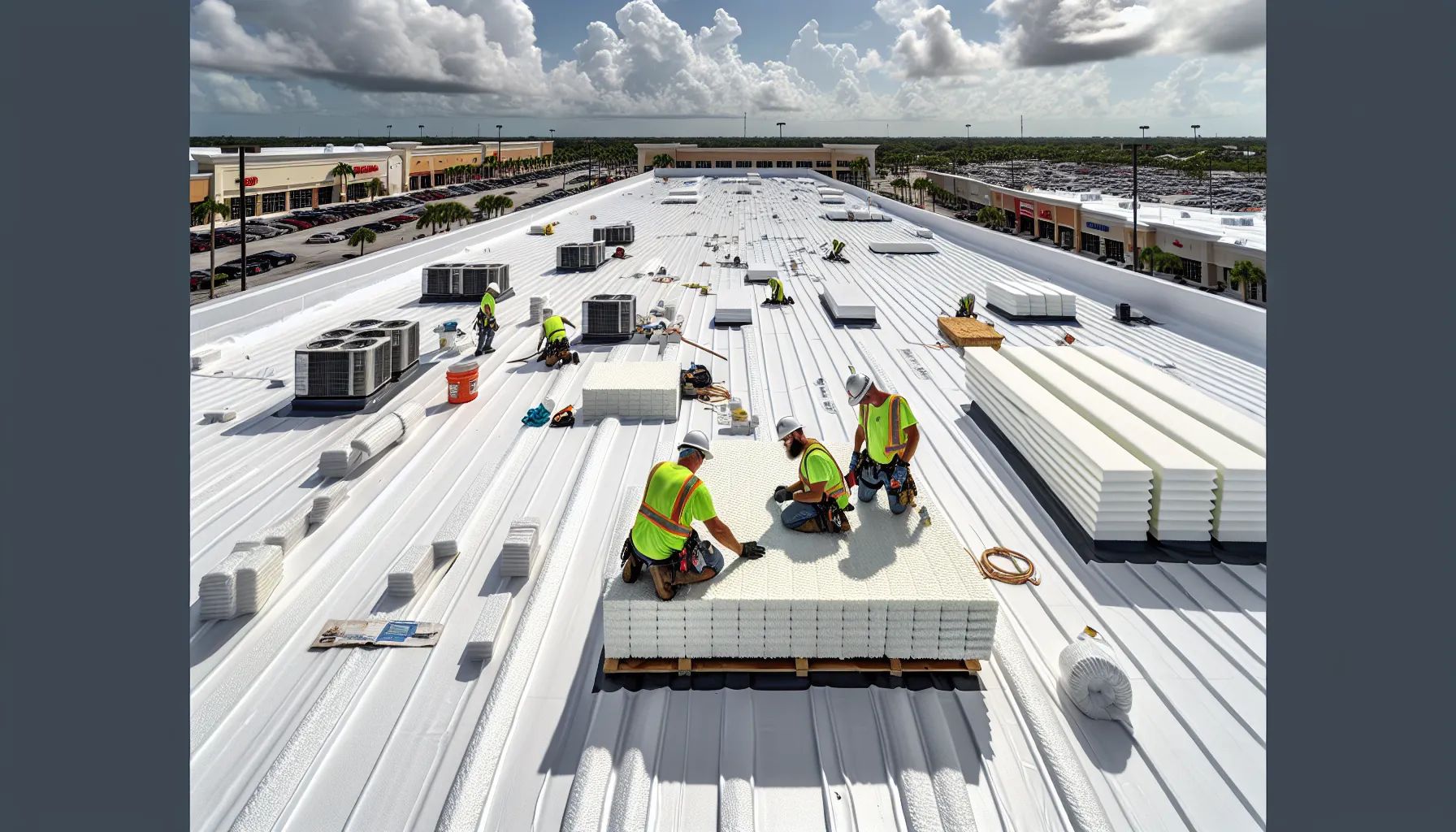
Reducing Cooling Costs in Hot and Humid Climates
Let's talk numbers. The average commercial building in Florida spends 30% to 50% of its total energy budget on cooling. That's thousands, sometimes tens of thousands, of dollars every year.
High-quality commercial roof insulation attacks this problem at the source. By preventing heat from entering your building through the roof, you reduce the thermal load your HVAC system has to handle.
Here's how it works:
- Lower roof deck temperatures: Insulation keeps the roof deck 30°F to 50°F cooler on a hot day.
- Less radiant heat: Your building's interior doesn't absorb as much heat from above, so ambient temperatures stay lower.
- Reduced HVAC runtime: Your air conditioning cycles less frequently and runs for shorter periods.
- Smaller equipment loads: In some cases, upgrading insulation allows you to downsize HVAC equipment during replacements, saving on equipment costs.
We've worked with clients who saw their monthly electric bills drop by $500 to $2,000 after upgrading to high-R-value polyiso or SPF insulation. The exact savings depend on your building's size, existing insulation, and occupancy patterns, but the trend is consistent: better insulation equals lower cooling costs.
Long-Term ROI and Utility Savings
Commercial roof insulation isn't just an expense, it's an investment with measurable returns.
Most insulation upgrades pay for themselves within 3 to 7 years through energy savings alone. After that, you're enjoying pure profit in the form of lower utility bills. And because quality insulation extends your roof's lifespan by reducing thermal stress, you're also delaying the need for a costly re-roof.
Let's look at a real-world example:
Suppose you own a 20,000-square-foot retail building in Clearwater. Your current roof has minimal insulation (R-5), and your cooling bills average $1,800 per month during summer.
You invest $30,000 to upgrade to polyiso insulation (R-30). Your cooling costs drop by 30%, saving you $540 per month during the seven-month cooling season, that's $3,780 per year. Your payback period is about 8 years, and over a 20-year roof lifespan, you'll save over $75,000.
Plus, you'll likely see:
- Lower maintenance costs: Fewer HVAC repairs due to reduced runtime.
- Higher property value: Energy-efficient buildings command higher sale prices and attract quality tenants.
- Rebates and incentives: Some utility companies and government programs offer rebates for energy-efficient upgrades.
The ROI is real, and it compounds over time.
R-Value Requirements and Building Code Compliance
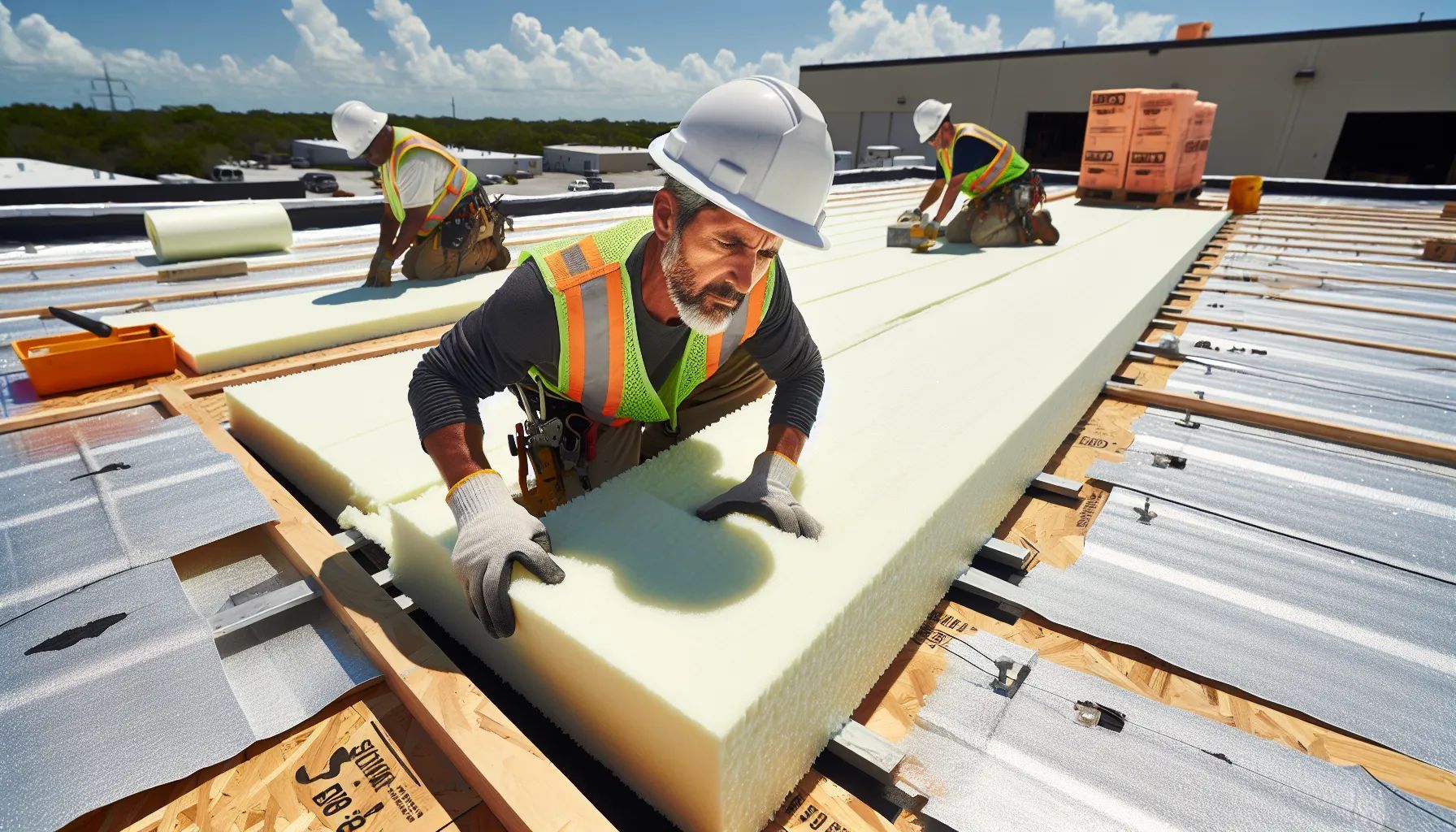
Understanding R-Value Standards for Florida
R-value measures thermal resistance, the higher the number, the better the insulation resists heat flow. In Florida, you're primarily concerned with keeping heat out, so high R-values are your friend.
Florida's energy code (based on the International Energy Conservation Code, or IECC) mandates minimum R-values for commercial roofs. As of recent updates, most commercial buildings in Florida require:
- R-20 minimum for flat or low-slope roofs with insulation entirely above the deck.
- R-25 or higher for certain building types or higher-performance targets.
These are minimums. We often recommend going higher, R-30 or even R-35, especially if you're running energy-intensive operations or want maximum cooling savings.
Here's a quick comparison:
- Polyiso (R-5.6/inch): 4 inches gets you to R-22.4.
- XPS (R-5.0/inch): 5 inches gets you to R-25.
- SPF (R-6.5/inch): 4 inches gets you to R-26.
Choosing the right material and thickness ensures you hit code requirements without over-engineering (and overspending).
Meeting Florida Building Code Requirements
Compliance isn't just about R-value. Florida's building code also addresses:
- Fire ratings: Insulation must meet Class A fire resistance standards.
- Wind uplift resistance: Your insulation and attachment method must withstand hurricane-force winds. This is especially critical along the coast.
- Moisture control: The code requires vapor retarders and drainage in certain assemblies to prevent condensation and water accumulation.
- Permitting and inspection: All commercial roof insulation projects require permits and inspections by local building departments.
Non-compliance can result in failed inspections, costly rework, and even liability issues if the roof fails during a storm.
When you work with a licensed contractor experienced in Florida projects, they'll handle the code research, permitting, and inspection coordination. Don't cut corners here, code compliance protects your investment and keeps your building safe.
Addressing Common Commercial Roofing Problems
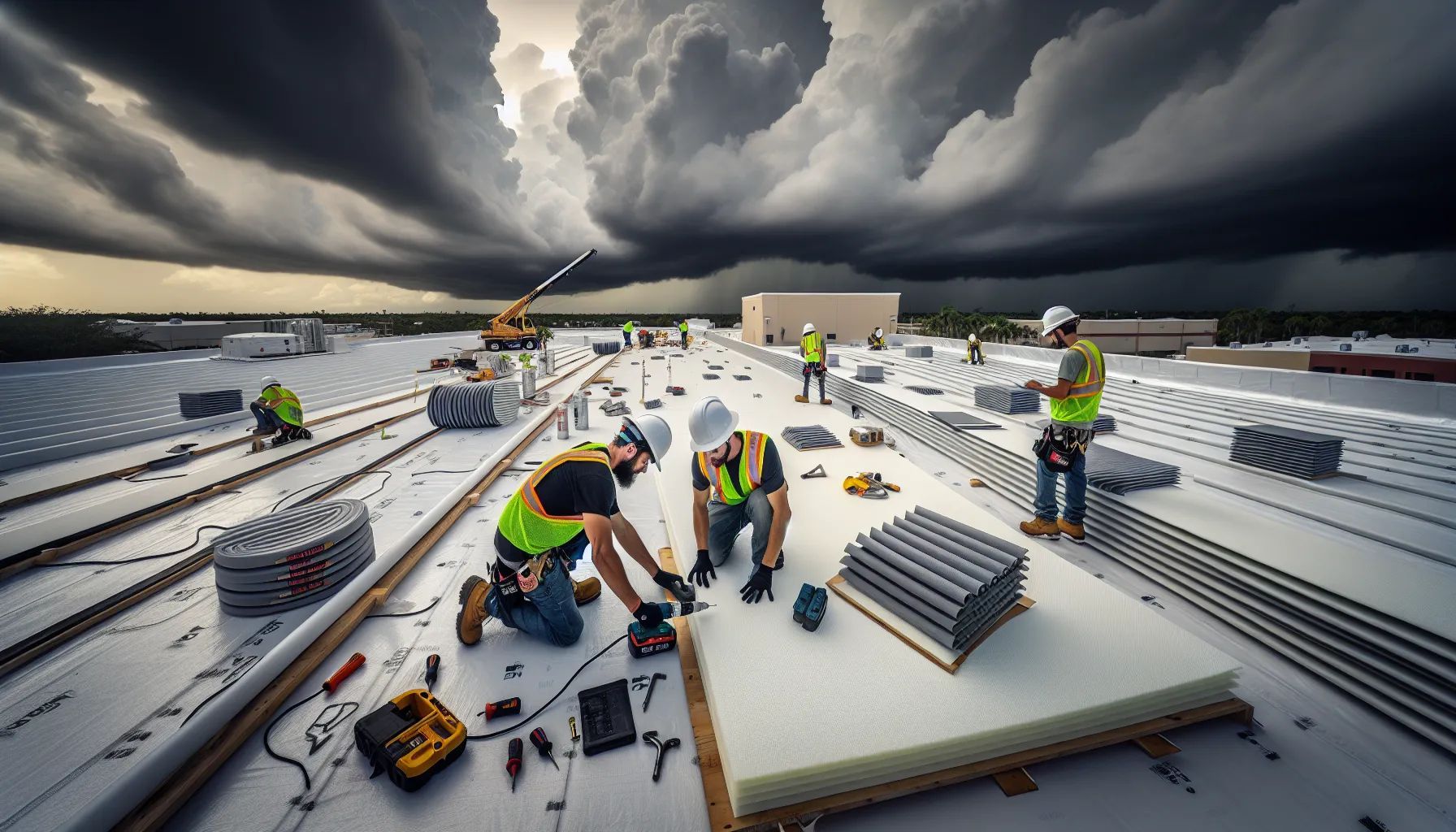
Storm Damage and Hurricane Preparedness
Living in Florida means preparing for hurricanes. Every. Single. Year.
Your commercial roof insulation plays a role in storm readiness. High-quality insulation adds structural rigidity to the roof assembly, helping it resist wind uplift. Polyiso and XPS boards, when properly fastened, lock the roofing membrane in place and distribute wind loads across the deck.
SPF insulation takes this a step further. Because it bonds directly to the roof deck and forms a monolithic layer, it significantly increases the roof's wind resistance. We've seen SPF roofs survive Category 3 and 4 hurricanes with minimal damage.
But insulation alone isn't enough. Your entire roof system, membrane, fasteners, flashing, and insulation, must be designed and installed to meet Florida's High Velocity Hurricane Zone (HVHZ) standards if you're in a coastal area.
Don't wait until a hurricane is bearing down on you. Upgrade your insulation now, and pair it with a wind-rated membrane and proper fastening schedule.
Moisture and Humidity Control
Moisture is the enemy of any roof system, and Florida's humidity makes the problem worse.
Poor insulation or improperly installed insulation can create condensation issues. When warm, moist air contacts a cold surface (like the underside of a metal roof deck), water vapor condenses. Over time, this leads to:
- Mold and mildew growth
- Rusted metal decking
- Deteriorated insulation
- Interior water damage and staining
Closed-cell insulation materials, polyiso, XPS, and SPF, are your best defense. They have low water absorption rates and resist moisture infiltration. SPF, in particular, creates a seamless vapor barrier that stops moisture migration in its tracks.
Proper roof design also matters. Your roof should include:
- Vapor retarders to block moisture from interior spaces.
- Adequate drainage to prevent ponding water on the roof surface.
- Ventilation in certain assemblies to allow moisture to escape.
If you're dealing with an older building or a roof with a history of leaks, a pre-installation moisture survey is a smart move. It identifies wet insulation that needs replacement before you install the new system.
Preventing Heat-Related Roof Deterioration
Heat doesn't just drive up your cooling bills. It also shortens your roof's lifespan.
Roofing membranes, especially single-ply systems like TPO and EPDM, expand and contract with temperature changes. On a black EPDM roof in full sun, surface temperatures can hit 170°F. At night, they drop to 80°F or lower. That's a 90°F temperature swing, and it happens every single day.
Over time, these cycles cause:
- Membrane cracking and splitting
- Fastener withdrawal
- Seam failures
- Accelerated aging of roofing materials
Insulation buffers these temperature swings. A well-insulated roof deck stays cooler, which means the membrane above it experiences less thermal stress. The result? Fewer repairs, longer membrane life, and better overall performance.
If you want your commercial roof to last 20 to 30 years, don't skimp on insulation. It's one of the best ways to protect your investment.
Installation Process and Best Practices
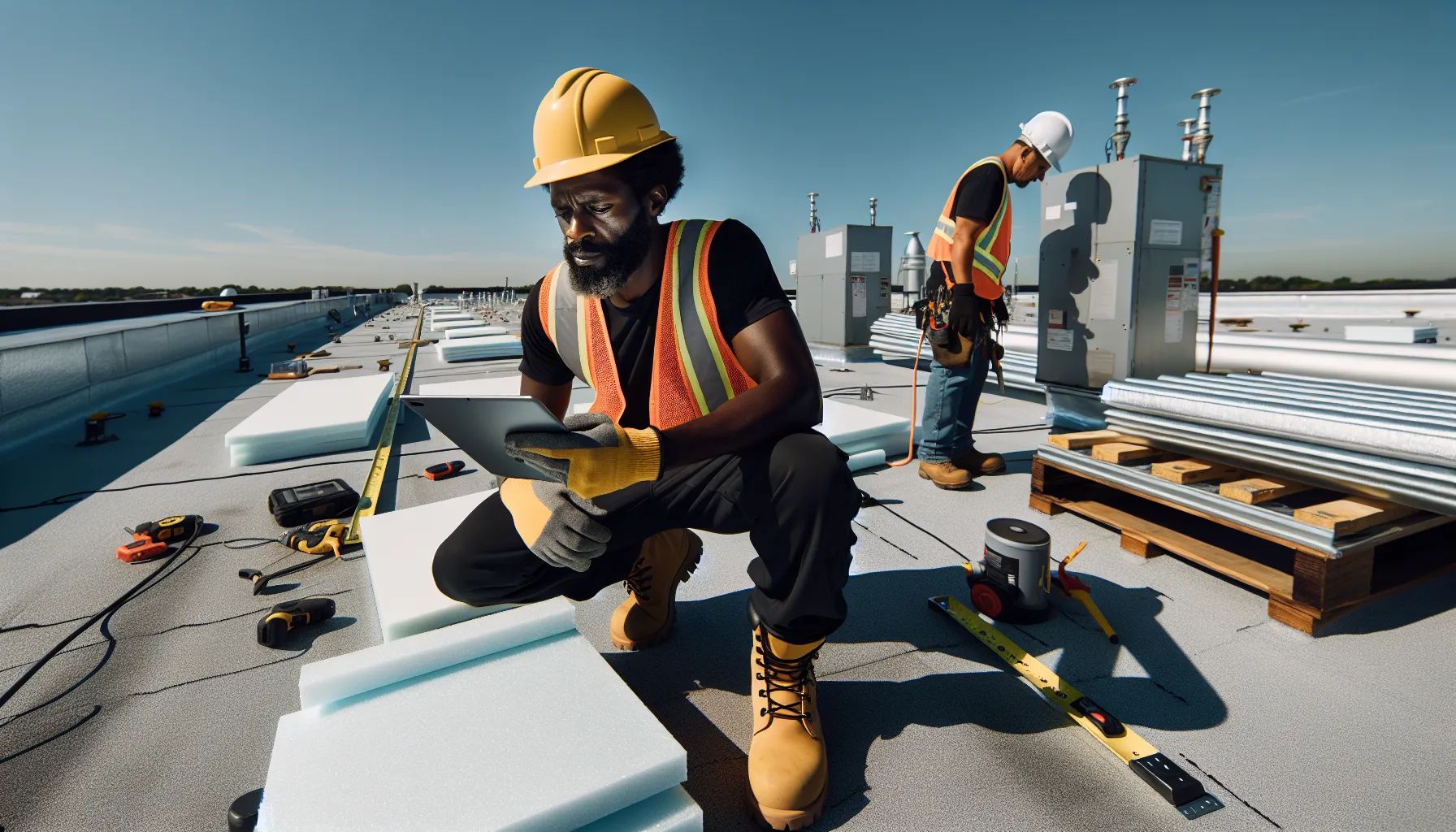
Pre-Installation Assessment and Planning
Before anyone sets foot on your roof, a thorough assessment is essential.
Here's what a good contractor will do:
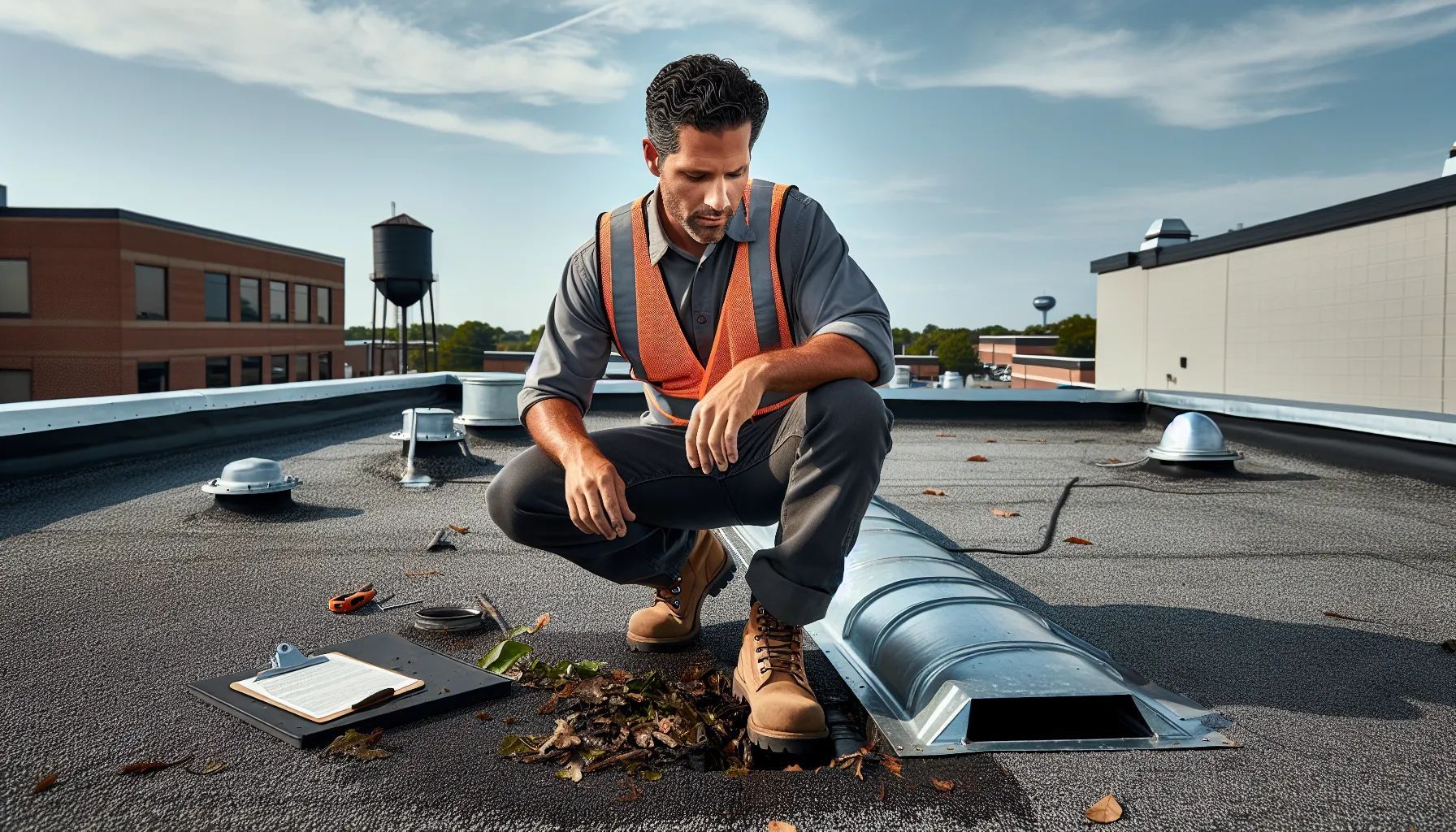
- Inspect the existing roof: Look for leaks, wet insulation, damaged decking, and structural issues.
- Evaluate building codes: Confirm R-value requirements, fire ratings, and wind uplift standards for your location.
- Measure and calculate: Determine the square footage, required insulation thickness, and fastener schedules.
- Review building use: Understand your HVAC loads, occupancy patterns, and energy goals.
- Check for moisture: Use infrared scans or core samples to identify wet insulation that needs removal.
This planning phase also includes selecting the right insulation material. A warehouse with a tight budget might do well with EPS, while a medical office needing maximum energy efficiency should go with polyiso or SPF.
Skipping this step leads to problems, wrong materials, inadequate R-values, or code violations that show up during inspection.
Professional Installation vs. DIY Considerations
Let's be blunt: commercial roof insulation is not a DIY project.
Here's why:
- Code compliance: Florida's building codes are complex, and inspectors won't approve work that doesn't meet standards. Licensed contractors know the codes inside and out.
- Safety: Commercial roofs are dangerous. Falls are the leading cause of construction fatalities. Professionals have the training, equipment, and insurance to work safely.
- Specialized equipment: SPF requires spray rigs and expertise. Even rigid board insulation needs proper cutting, fitting, and fastening.
- Warranties: Manufacturer warranties require professional installation. DIY work voids coverage, leaving you on the hook for any failures.
- Quality assurance: Experienced installers know how to handle details like flashing, penetrations, and edge terminations that make or break a roof's performance.
Yes, hiring a pro costs more upfront. But the peace of mind, code compliance, and long-term performance are worth every penny.
If you're considering a DIY approach to save money, remember this: a failed roof can cost tens of thousands to repair. A poorly insulated roof will bleed money on energy bills for decades. Don't gamble with your building's most important protective barrier.
Maintenance and Inspection for Insulated Commercial Roofs
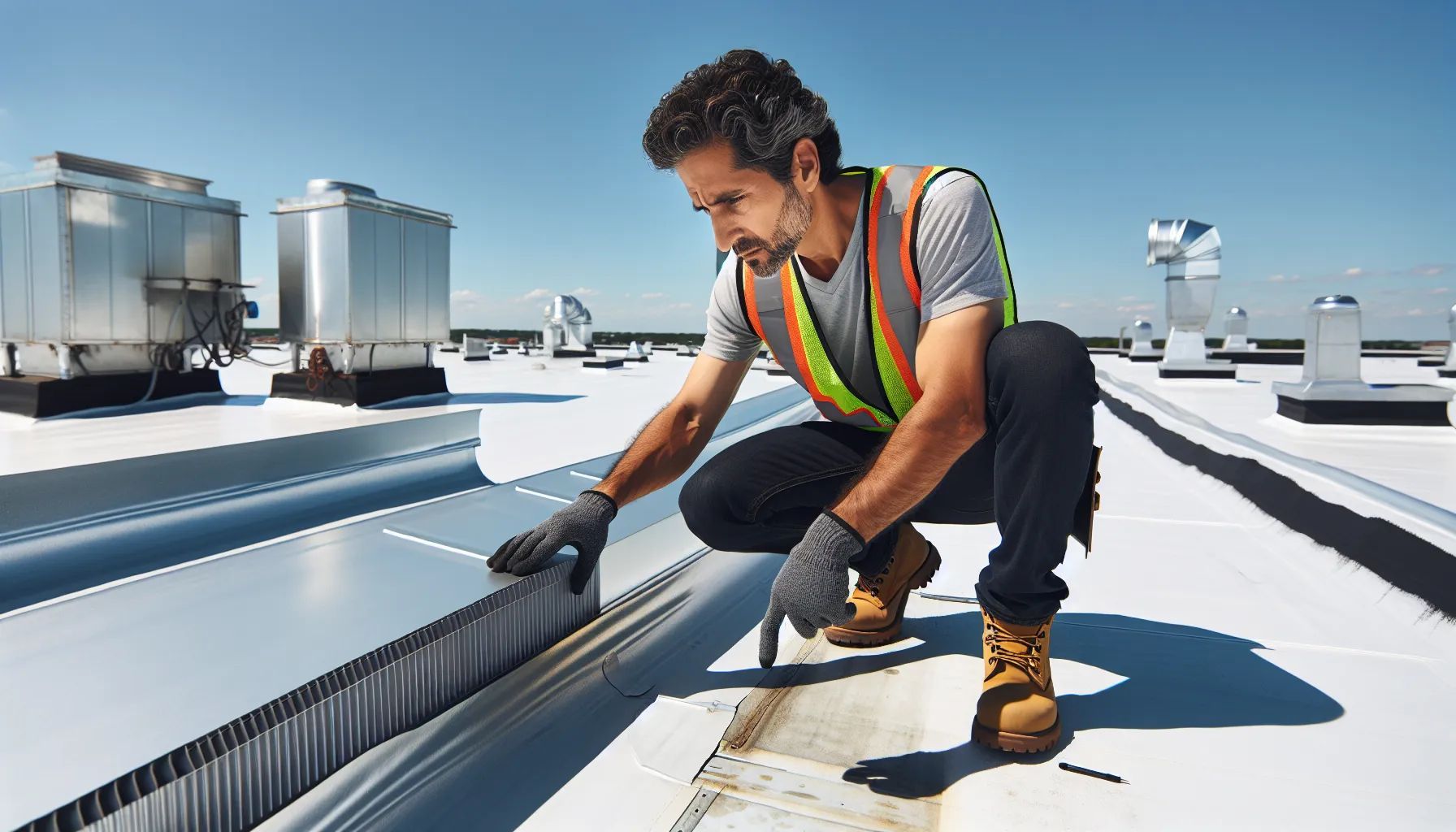
Regular Inspection Schedules
Your commercial roof is an investment, and like any investment, it needs regular attention to perform at its best.
We recommend inspecting your insulated commercial roof at least twice a year, once in spring before hurricane season, and again in fall after the worst of summer heat has passed. High-traffic roofs or buildings with rooftop equipment should be inspected quarterly.
During an inspection, look for:
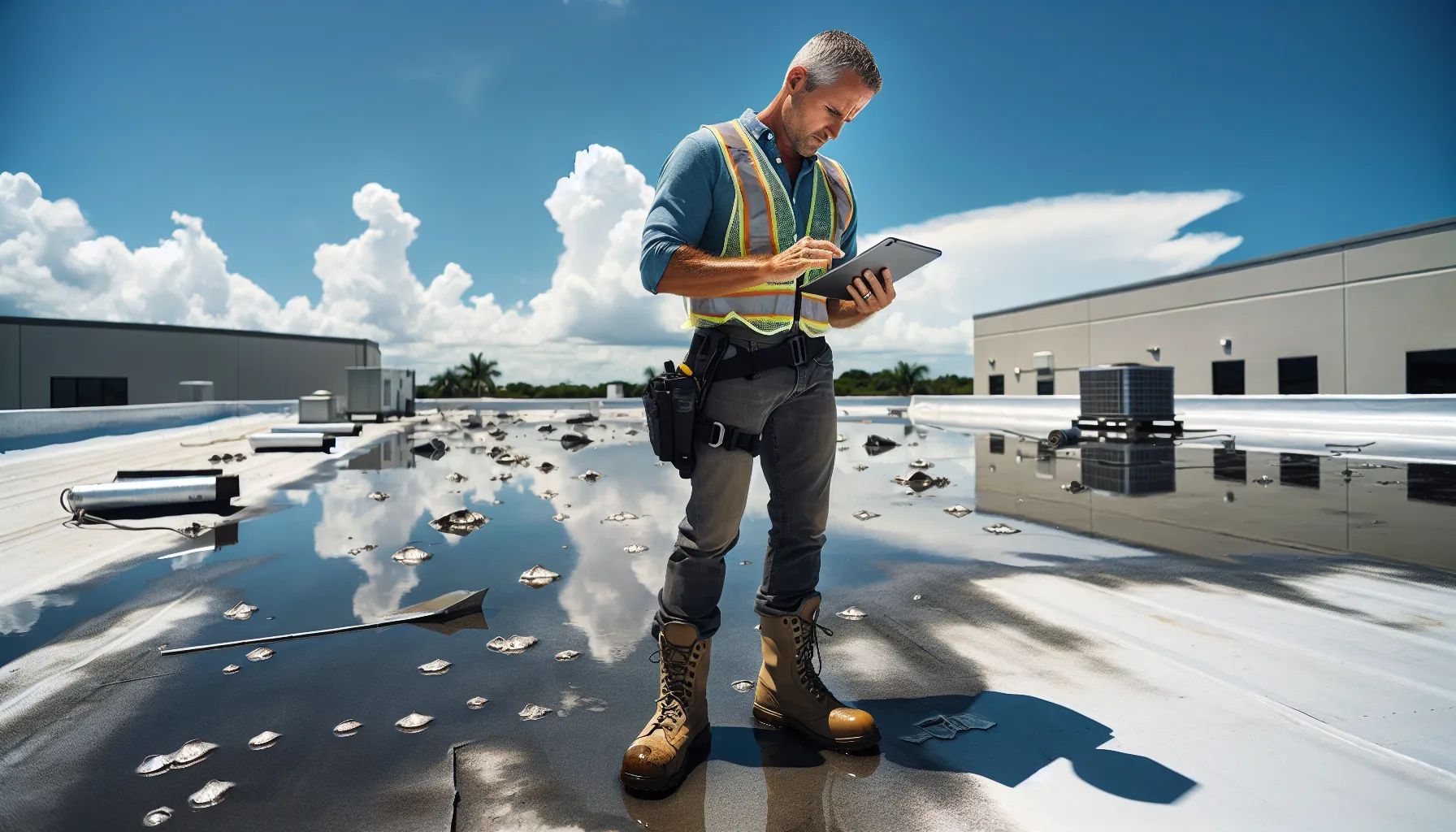
- Ponding water: Standing water that doesn't drain within 48 hours can signal drainage problems or settled insulation.
- Membrane damage: Punctures, tears, or lifted seams that could allow water infiltration.
- Flashing failures: Loose or corroded flashing around penetrations, edges, and parapets.
- Fastener issues: Loose or withdrawn fasteners that reduce wind resistance.
- Surface wear: On SPF roofs, check for UV damage or worn protective coatings.
Catch small problems early, and you'll avoid expensive emergency repairs down the road.
Signs Your Insulation Needs Repair or Replacement
Insulation doesn't last forever. Even high-quality materials degrade over time, especially if the roof leaks or the building experiences storm damage.
Here are warning signs that your commercial roof insulation needs attention:
- Rising energy bills: If your cooling costs are creeping up even though steady occupancy and HVAC maintenance, wet or compressed insulation could be the culprit.
- Interior water stains or leaks: Water infiltration often damages insulation long before you see interior staining.
- Uneven temperatures: Hot or cold spots in your building suggest insulation gaps or failures.
- Sagging or soft spots on the roof: This indicates wet, compressed insulation that has lost its structural integrity.
- Mold or musty odors: Moisture trapped in insulation creates the perfect environment for mold growth.
- Visible damage after a storm: If your roof sustains wind or hail damage, the insulation underneath may also be compromised.
If you notice any of these signs, schedule a professional inspection immediately. Delaying repairs allows the problem to spread, leading to more extensive (and expensive) work later.
Choosing the Right Contractor for Your Project
Essential Credentials and Licensing
Not all roofing contractors are created equal, and in Florida, licensing and credentials matter. Ours can be found in the footer of our website!
Here's what to look for:
- Florida state license: Commercial roofing contractors must hold a valid license issued by the Florida Department of Business and Professional Regulation. Verify the license is current and in good standing.
- Insurance: Confirm the contractor carries general liability and workers' compensation insurance. Ask for certificates and verify coverage directly with the insurer.
- Manufacturer certifications: Top insulation manufacturers, GAF, Carlisle, Johns Manville, and others, certify contractors who meet their installation standards. Certified contractors can offer extended warranties.
- Local experience: Choose a contractor familiar with Florida's building codes, climate challenges, and permitting processes.
- References and portfolio: Ask for recent project photos and client references. Call those references and ask about quality, timeliness, and communication.
Don't hire the cheapest bidder just to save a few bucks. You're trusting this contractor with a major investment. Do your assignments.
Questions to Ask Before Hiring
Before signing a contract, interview your prospective contractor. Here are the questions we recommend:
- How long have you been installing commercial roof insulation in Florida? Experience with Florida's climate and codes is non-negotiable.
- What insulation material do you recommend for my building, and why? A good contractor will explain the pros and cons of each option based on your specific needs.
- Can you provide a detailed written estimate? The estimate should include material costs, labor, permits, and a timeline.
- What warranties do you offer? Ask about both manufacturer warranties on materials and workmanship warranties from the contractor.
- How do you handle permitting and inspections? The contractor should pull all necessary permits and coordinate inspections.
- What's your payment schedule? Avoid contractors who demand large upfront payments. A reasonable schedule ties payments to project milestones.
- Who will be on-site, and how do you manage quality control? Understand who's doing the work and how the contractor ensures quality.
- What happens if there's a problem after installation? Clarify the process for addressing defects or warranty claims.
A professional contractor will answer these questions confidently and provide documentation to back up their claims. If someone dodges questions or pressures you to sign quickly, walk away.
Conclusion
Commercial roof insulation isn't the most glamorous upgrade, but it's one of the smartest investments you can make in your Florida building.
From slashing cooling costs and boosting comfort to protecting against hurricanes and extending your roof's lifespan, the benefits are clear and measurable. Whether you choose polyiso for its high R-value, SPF for its seamless coverage, or XPS for its moisture resistance, the right insulation will pay dividends for decades.
But the material is only half the equation. Code compliance, professional installation, and ongoing maintenance are just as important. Cut corners on any of these, and you'll end up with underperforming insulation, voided warranties, and costly repairs.
If you're ready to move forward, start by scheduling a professional roof assessment. A qualified contractor will evaluate your building's needs, recommend the best insulation solution, and provide a detailed proposal. Don't wait until your next energy bill shocks you or a summer storm exposes weaknesses in your roof. Take action now, and you'll enjoy lower costs, better performance, and greater peace of mind for years to come.
Get in touch with a licensed commercial roofing contractor in your area today, and take the first step toward a more energy-efficient, resilient building.
How much can commercial roof insulation reduce cooling costs in Florida?
Well-insulated commercial roofs in Florida can reduce cooling expenses by 20% to 40%. By preventing heat transfer through the roof deck, insulation significantly decreases the thermal load on HVAC systems, resulting in lower energy bills and reduced equipment wear.
What is the best insulation material for commercial roofs in hot climates?
Polyisocyanurate (polyiso) is highly recommended for Florida's climate, offering an R-value of 5.6 per inch. It provides excellent thermal resistance, resists moisture, and meets Florida building codes while remaining lightweight and durable for flat and low-slope roofs.
What R-value does Florida building code require for commercial roofs?
Florida's energy code mandates a minimum R-value of R-20 for flat or low-slope commercial roofs with insulation above the deck, with R-25 or higher recommended for certain building types. Many experts suggest R-30 or R-35 for maximum energy efficiency.
How long does commercial roof insulation typically last?
Quality commercial roof insulation can last 20 to 30 years when properly installed and maintained. The lifespan depends on the material type, installation quality, climate exposure, and regular inspections to address moisture damage or membrane failures promptly.
Can spray foam insulation help my commercial roof withstand hurricanes?
Yes, spray polyurethane foam (SPF) insulation significantly improves wind resistance by bonding directly to the roof deck and forming a monolithic, seamless layer. This adds structural rigidity and helps the roof assembly resist wind uplift during hurricanes and severe storms.
Is it worth replacing old commercial roof insulation or just adding more layers?
Wet or damaged insulation should be removed and replaced rather than covered. Moisture-compromised insulation loses thermal performance, promotes mold growth, and can't support new roofing layers effectively. A professional moisture survey helps determine if replacement is necessary.